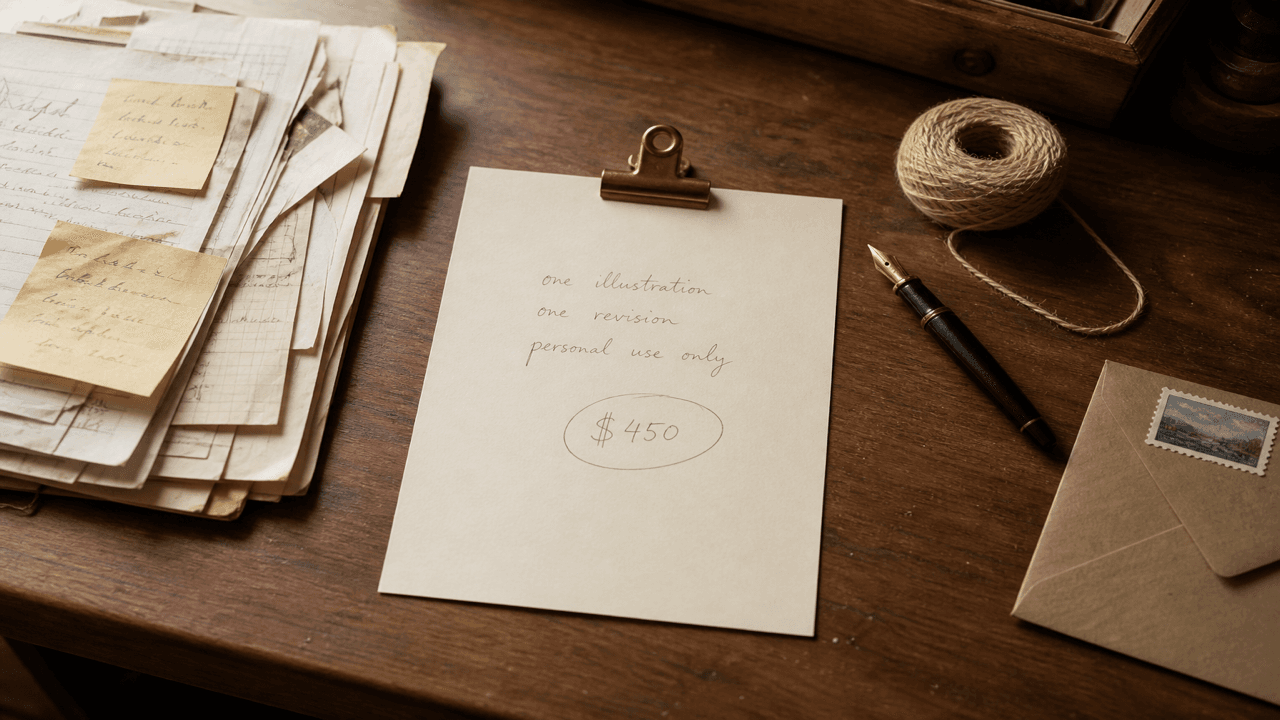
You already know how to do the work. That is not the problem. The problem is every new buyer gets a custom scope, a custom price, and a week of unpaid email. In 2026 you can still sell the same outcome as a product: one scope, one price, one page.
Indiecity is for one person or a team under twenty. You do not need a delivery team to productize. You need one job you have already done more than once, and a number you will say out loud. This guide is how you turn that job into an offer someone can buy this week.
A productized offer is not a cheaper hourly rate
Jonathan Stark’s definition is short: a productized service is a fixed-scope service at a published price. The buyer can read the page and know what they get, what they pay, and when it is done. No discovery call to invent the work. No proposal that dies in a thread.
A fixed-scope service that you offer at a published price.
Hourly work sells your hands. Stark’s line on the book page is sell your head, not your hands. Hours, pixels, and lines are arbitrary units. They have nothing to do with the outcome. A productized offer sells the outcome you already know how to deliver.
It is not a SaaS. Brian Casel started Restaurant Engine as software for restaurants, then learned the value was the setup. In his 2015 Smashing Magazine piece he wrote that he had to stop pretending it was self-serve. Customers asked him to set the site up. He made that the product.
It is not “unlimited revisions for a monthly fee” if you have not capped the job. Unlimited is custom work with a subscription sticker. Cap the outcome. If they need more, they buy more, or they buy a custom job at a higher price.
Look at the last ten invoices, not a blank idea pad
Open the last ten paid jobs. Write the outcome in one line each. Circle the ones that used the same steps. That repeat is the offer. The one-off rebuild is still client work.
If nothing repeats, you do not have a productized offer yet. You have variety. Pick the job that paid fastest, hurt least, and used words the buyer already said. Drop the rest for two weeks.
For each circled job, write five facts. Not a brand story. Facts:
- Who paid: job title, not a company you like the sound of
- What was on fire when they wrote you
- What you actually delivered, not what the proposal promised
- How long it took when you were not performing
- What they already tried: a freelancer, an intern, a tool, or nothing
If you cannot answer those, you are guessing. Talk to two past clients about the job they already paid for. Ask what they did last time the mess hit, not whether your new package sounds cool. That split is how to tell if people will pay, not just say they like it.
One buyer, one outcome, one price
On Startups for the Rest of Us, episode 208, Casel put the buyer’s view in one breath: a specialized, done-for-you solution at a set price and scope. No long proposal. No discovery meeting to invent the work.
This is the scope. This is the price. It offers this type of value. Buy now.
Write four lines. That is the offer. If you cannot say them out loud, the page will not save you.
- Who it is for (one job title, one situation)
- The mess they already have, in their words
- What you finish, and what is out of scope
- The price, and how long until they have it
That is the same job as describing a SaaS in one sentence. Use the one sentence tool if you want a draft to edit. Then put the number on the page. If you have no competitor package to copy, price against the time and tools they already burn.
Do not publish three tiers on day one. One offer. One number you can say without wincing. Patrick McKenzie has been saying charge more for years. If you charge a joke price they treat you like a joke vendor. The price from value tool will give you a draft. Edit it. Then say it.
Done for them, not a kit they assemble
Casel’s first version of Restaurant Engine was a DIY builder. Restaurant owners did not want a builder. They wanted a site that worked so they could cook. The first change that moved sales was a setup service: he put the menu and photos in and connected the domain. Then he charged for setup. Then he required it. People who skipped setup cancelled. People who paid for setup stayed.
That is the productized move. Stop selling a toolkit. Sell the finished job. If you are a designer, the offer is the page that ships, not Figma access. If you are a developer, the offer is the workflow that runs, not a repo they have to finish. If you write, the offer is the issue that goes out, not a folder of drafts.
Paul Graham’s 2013 essay still holds: you recruit buyers one by one and do the work by hand. Casel had to learn the same thing after he spent months on a self-serve builder nobody wanted to use. Do not spend six months automating a job nobody has paid you to do. Deliver the outcome. Write down the steps. Automate the bottleneck later.
You can't wait for users to come to you. You have to go out and get them.
Put the price where a stranger can see it
Stark’s point is that a productized offer lives on a static page: price, scope, terms, timeline. Custom work hides those answers in a pile of emails. The page does that work once. A stranger should be able to say yes or no without booking you to invent a quote.
A waitlist is not a price. If you can deliver this week, charge on day one. Make a payment link or an invoice path. Do not hide behind “book a call to discuss pricing” if the job is already packaged. The call is for fit, not for inventing the number.
On the page, write what is in, what is out, when they pay, and when you start. In is the outcome. Out is the custom work you used to throw in for free. Pay is now, or a clear split with a date, not “50% when you feel done.” Start is a calendar week, not “after I wrap other clients.”
Sell it to people who already paid you for the messy version
Your first buyers are not strangers on a launch day. They are past clients, colleagues, and people who already asked for this job in a custom shape. Getting SaaS customers from people you already know is the same warm list. Tell them the custom version is closed for new work. The package is how you do this job now.
Write fifteen names. Past clients who bought the messy version. People who asked for a quote and went quiet. Friends who run the kind of shop that has this mess. One person each of those people would introduce you to. Then send. Five human notes beat a new landing-page animation.
If you still have zero names, you do not need more packaging. You need your first paying customer: one person, one price, one ask. The package just makes that ask easier to say twice.
Hey [name]. Last time I did [the messy custom job] for you. I now sell that as one package: [outcome] for [who], done in [time], for [price]. Custom quotes for that job are closed. If you still have the mess, I can start you the week of [date]. If not, who should I write to?
Hey [name]. You asked about [the job] in [month]. I stopped writing custom scopes for that. It is now [outcome] for [price], [time] to done. Here is the page: [link]. If that is still the problem, say yes and I will send the invoice. If it is not, no need to explain.
The package is [outcome] for [price]. [Extra thing] is out of scope. I can do that as a separate custom job at [higher price], starting after this one. Or we stay inside the package and ship [date]. Which do you want?
If you want [outcome] off your plate this month, it is [price]. I can start [day]. Want me to send the invoice?
You are in. I start [day] and you get [outcome] by [date]. Who else has this same mess? A name and a one-line intro is the most useful thing you can do after the payment.
Send two a day for three days. Track sent, replied, booked, paid. Rewrite the four lines using only words people used back to you. Do not add a second package between messages. Do not drop the price because they already know your face. If you want a draft note, use the first ask tool and then make it sound like you.
A two-week plan
- Day 1. Open ten invoices. Circle the repeat. Write the four lines. Put a price on one page. Make a way to take money.
- Day 2. Write fifteen names. Past clients first. Then quiet quotes. Then intros.
- Days 3 to 5. Send two personal notes a day. Run any reply the same day. Say the price. Take payment if they say yes.
- Days 6 to 7. Deliver the first package by hand. Write the actual steps you used, including the ugly ones.
- Week 2. Send the rest of the list. Follow up once on soft nos. Ask every paid buyer for one intro. Do not open a custom quote for the same job.
Keep four columns: sent, replied, booked, paid. Add a fifth only for the exact phrase they used for the problem. That phrase replaces your headline. When the first payment clears, you already have the method. Stretch the list the same way you would for the first 10 paying customers without ads.
This can stay a service. It can also become software.
You do not have to turn this into a SaaS. A productized offer that pays is already a business. Software is optional. Casel said the same thing from the other side: he started with software, then admitted the service was the product.
Rob Walling’s stair step is the order for people who do want a product company later. Do not jump to a standalone SaaS as your first sale. Learn to sell something simpler first. A packaged job you already know how to deliver is a real first product. You already have the work. You are changing how you sell it.
If the same steps show up every time, later you can build an MVP you can charge for. If they do not, keep the service. Build a second product or double down is a later question. Do not open a second offer because week one felt quiet.
In 2022 Casel sold the Productize teaching brand and went into software. He still wrote that he recommends productized services as the path of least resistance from freelancer to a business that can scale. You do not have to follow him into software. You have to stop writing a new proposal for a job you already know.
What to stop doing
- Writing a new proposal for a job you have already delivered.
- Hiding the price behind a discovery call.
- Selling a DIY kit when the buyer wants the finished job.
- Calling unlimited revisions a package.
- Building software before anyone has paid for the manual version.
- Discounting the package for people who used to buy custom.
- Publishing three tiers you invented on a Sunday.
- Taking a custom “quick one” that is the same job at a worse price.
Ship the package, then take the money
A productized offer is not a rebrand of your freelance page. It is a decision: this job now has one scope, one price, and a page a stranger can say yes to. Client work taught you the job. The package is how you stop quoting that same job from scratch.
When the story is real and you will put your name on it, send it in. When the product or the offer is real, put it on the map. You can join Indiecity while you do the two weeks. That gives you people to talk to. It does not write the four lines.
Until then, open the invoices. Circle the repeat. Put a price on one page. Write the fifteen names. Ask for the money.
FAQ
Questions people get stuck on
What is a productized offer, in one sentence?
A fixed-scope job at a published price. The buyer can read one page and know what they get, what they pay, and when it is done. Jonathan Stark’s definition is that short: a fixed-scope service you offer at a published price.
Is this the same as a retainer?
A retainer is often “hours on tap.” A productized offer is a named outcome. Monthly can work if each month has a cap: one test, one issue, one site update, one hiring scorecard. If the client can invent new work inside the fee, you are back on custom.
Can I still take custom work?
Yes, on purpose. Close custom for new buyers of the job you packaged. Keep a custom lane only if you want it, and price it higher than the package. If custom is cheaper, nobody will buy the package.
Every client is different. How do I package that?
They are not different in the way that matters. The industry, the logo, and the stakeholders change. The job often does not. Open the last ten invoices. If three of them used the same steps, that is the offer. If nothing repeats, you do not have a package yet. You have variety. Pick one repeat and drop the rest for two weeks.
How do I price it if I used to bill hourly?
Do not multiply hours by a rate and hide the math. Price against what the mess already costs them in time, tools, and a person. Then pick a number you can say without wincing. [How to price a SaaS when you have no competitor](/stories/price-saas-no-competitor) is the same job: substitutes, not a copied grid. The [price from value tool](/tools/price) will give you a draft number to edit.
Do I need a team to productize?
No. Brian Casel’s later writing is about systems and people. You do not need that on week one. [Indiecity is for one person or a team under twenty](/about). You need one outcome you can deliver yourself, a page with a price, and someone who pays.
Should I build software first?
No. Casel started Restaurant Engine as self-serve software, then learned restaurant owners wanted the site done for them. Rob Walling’s stair step is the same warning: do not jump to a standalone SaaS before you can sell something simpler. Deliver the outcome by hand. Software comes after the same steps show up every time.
What if a past client wants the old custom deal?
Tell them the custom version is closed for that job. Offer the package. If they need a true one-off, quote it higher than the package and give a later start date. Do not reopen the cheap custom lane because you like them. That is how the package dies.
How many offers should I publish?
One. Three tiers on day one is a pretty grid you invented. After five paid packages you will know who asks for more and what actually splits a second option. Until then, one page.
Is “unlimited revisions” a productized offer?
Not if the client can keep inventing work. Unlimited is custom work with a subscription sticker. Cap the outcome: one version, one revision window, one list of what is in and out. If they need more, that is a second purchase or a higher custom job.