You can build almost anything this year. AI writes the boring parts. Tereza Tizkova wrote in 2026 that you can vibecode your own SaaS instead of paying someone $50 a month for theirs. Building is not the problem. Finding a problem people already pay for is.
Pieter Levels put it plainly in June 2026: everyone can build apps with AI. Almost nobody has an audience, ad money, or a free path to attention. If your idea is “a dashboard someone might like,” you will ship another unused dashboard. If your idea is a problem people already fund with cash, time, or headcount, you have something to sell.
Indiecity is for one person or a team under twenty. You do not need a hundred ideas. You need one problem with a receipt on it.
Start with a problem that already has a receipt
A nicer notes app is not a business. It becomes a SaaS idea when someone already spends money or real hours on the same mess. That spend is a credit card, an invoice, a contractor, a junior hire, or a weekly ritual that eats an afternoon. If clients already pay you to do the work manually, consider turning that client work into a productized offer before building software.
Paul Graham still says to look for problems, preferably ones you have yourself. Notice what is already broken. Do not sit down and invent a category. Made-up ideas sound fine in a group chat. They die when you ask for money.
The best way to come up with startup ideas is to ask yourself the question: what do you wish someone would make for you?
In 2026, add one more test. Would you pay for that thing if someone else shipped it? If the honest answer is no, keep looking. Your own card is the first filter. Then you check whether other people have the same bill.
Audit the money you already spend
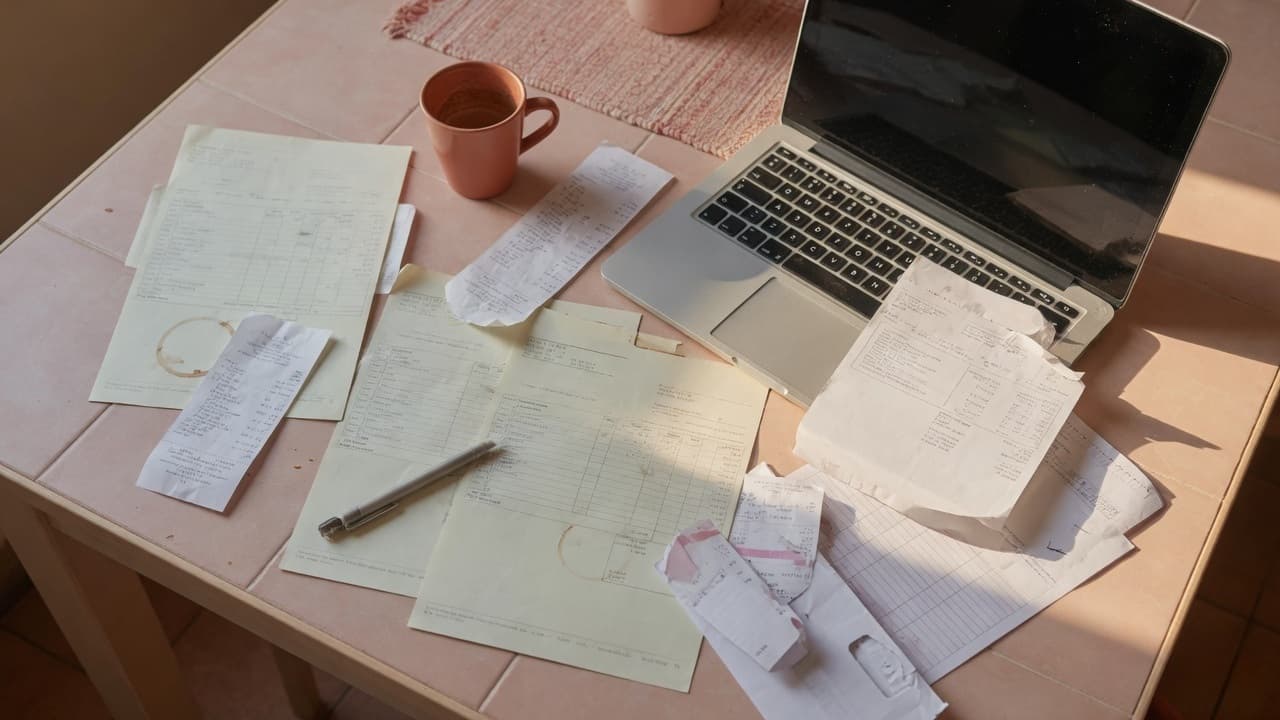
Open your bank app, your company card, and every SaaS login you renew on autopilot. Write a plain list. Tool name. Monthly or annual price. Who on the team actually uses it. What job it is supposed to do. Where it fails.
You are not looking for “build a better Notion.” You are looking for the row that makes you angry every week. The export that never works. The report you rebuild by hand. The seat you pay for so three people can avoid a worse process.
- Subscriptions and seats on your personal and company cards
- Contractors or freelancers you hire because software failed
- Spreadsheets that replaced a product that was too heavy or too vague
- Internal tools nobody outside your team would understand
- Workflows that only work because one person remembers the steps
Circle every item that costs money or more than two hours a week. Those are the problems worth a second look. The rest is noise. Once you have the circles, you already know more than a founder staring at a blank idea list.
What a receipt already proved
When you already pay, three things are true. The problem is real enough to leave your wallet. Someone sold a partial fix. You know the words of a buyer, because you are one.
That is a better start than a trend chart. Rob Walling surveyed more than 200 founders making at least $1k a month. He reports that 72% found the idea at work. You hear the complaint in standup. You see which workaround the team refuses to drop.
A sheet your company lives in already counts. So does a Friday report you rebuild by hand. Someone could charge for a cleaner version of that one job. The next trap is building for a hobby version of yourself who never pays.
The trap inside “scratch your own itch”
Founders misuse the phrase. They build for a hobby version of themselves who never pays. They optimize for what is fun to ship, not for a buyer with a deadline. Then they wonder why demos get compliments and no cards.
Scratch your own itch only works when you would buy the fix at a real price, and when people like you already try to buy something nearby. If you would only use a free plan, you are studying free users. Free users teach you about free users.
Ask yourself out loud: if a stranger shipped this tomorrow at my target price, would I switch this month? If you stall, the idea is still a toy. Your own receipt is not enough. You still need other people with the same bill.
Study people who already complain in public
Your receipt is the start. Other people’s complaints are the market. Amy Hoy’s Sales Safari is watching buyers where they already vent, not interviewing them into politeness. Copy the phrases they use when they are mad. Ignore the phrases you want on a landing page.
Do this for the problem you circled:
- Search forums, Slack archives, Discord, Reddit, and review sites for the exact job, not the category name.
- Open one-star and two-star reviews of tools you already pay for. Highlight the sentence that matches your pain.
- Save five posts where someone asks for a tool that does X, or says they built a sheet because nothing fit.
- Write the buyer’s job title and the outcome they want in their words, not yours.
- Ignore praise. Polite interest is not money.
If you cannot find people complaining about the same thing you pay to fix, you may be the only one. That can still be a consulting gig. It is a weak SaaS start. When you do find them, keep the idea small enough to sell to ten people.
Write one narrow sentence, not a category
Graham wrote that a small group with a deep need beats a big group with a shallow one. “Project management for everyone” will not sell. “Handoff checklist for agency account managers who lose revisions in email” is something you can sell to ten people this month.
Write one sentence in this shape: [role] pays [price range] to stop [specific weekly pain], and today they use [tool or workaround] that fails at [exact point]. If you cannot fill every blank, you do not have an idea yet. You have a theme. If that line is still vague, describe the SaaS in one sentence before you add a feature.
[Role] already spends [money or hours] on [current tool or hack]. It breaks when [specific moment]. I will charge [price] to remove that failure.
Put that sentence above your editor. If a feature does not serve it, do not build it. The sentence already has a price in it. That number is part of the idea, not a later marketing task.
Price is part of the idea
An idea without a price is a hobby. Look at what you and people like you already pay. If the category runs $30 a month and still fails, you can often charge more for a narrower fix that saves a person-day. Patrick McKenzie has been telling founders to charge more for years. If you price like a toy, they treat the work like a toy.
Pick a number you can say on a call without flinching. Put it in the first note you send. If ten people with the problem will not talk about that number, you chose the wrong buyer or the wrong pain. Change one of those. Do not add features to hide from the answer. Run the next two weeks against one sentence, not against five new ideas.
A two-week plan to pick one idea
- Day 1. Dump every subscription, contractor, and painful sheet into one list. Circle only the items that already cost money or hours.
- Day 2. For the top three circles, write the idea sentence with role, price, and failure point.
- Days 3 to 5. For each candidate, collect five public complaints or reviews in the buyer’s words.
- Day 6. Kill any candidate with no public trail and no second person who spends on it.
- Days 7 to 10. Message ten people who match the surviving role. Ask what they did last time the pain hit. Do not pitch a product yet.
- Day 11. Rewrite one offer page with their words and one price.
- Days 12 to 14. Ask five of them if that offer is worth the price this month. Count yes, no, and silence.
Keep a simple table: candidate, receipt proof, public complaints, conversations, paid interest. The winner is the row with proof in every column, not the row that feels clever.
Hey [name]. I keep paying for [tool] and still lose a day to [specific failure]. You mentioned the same mess. What did you do the last time it blew up? What did that cost you in time or money? I am deciding whether to build a narrow fix. A short reply is enough.
When someone describes the same failure and already spends to dodge it, you have an idea. When they only say “cool,” you still have a chat. For how to run those talks, use customer interviews when you have zero users.
Then sell before you overbuild
In 2026 the build step is the easy week. The hard step is the same as always: people who pay. Once the idea sentence is solid, stop collecting more ideas. Validate the idea before you write code. Put a price on a page. Talk to buyers. Take money when they say yes.
If you need a full path from offer to payment, read how to get your first 10 paying customers without ads. Idea work ends when someone pays to fix the problem. Customer work starts the same day.
What to stop doing
- Brainstorming ideas that no card on your statement supports.
- Cloning a horizontal giant because you use it every day.
- Building for a free version of yourself who never buys software.
- Waiting for a unique category with zero competitors.
- Asking friends if the idea is cool instead of what they paid last time.
- Writing a roadmap before you can fill the idea sentence.
- Hiding from price because the product is not “ready.”
How you know you picked right
You can point at a receipt. You can quote a stranger who hates the same failure. Someone takes a call. Someone asks the price before you do. Someone pays for a rough version. Those signals beat a polished deck.
If two weeks of real conversations produce zero interest in a price, the idea is wrong or the buyer is wrong. That is a clean result. Pick the next circled row. Do not open the editor to avoid the lesson.
When the idea is real, write it down
A good idea from a problem you already pay for is not a clever thought. It is a narrow problem people already spend on, and you can say it in one sentence. Building stays easy this year. Getting attention stays hard. Start where money already moves.
If you ship and people pay, send us the story. When the product is real and the name is yours, put it on the map. You can join Indiecity while you run the two weeks. That gives you people to talk to. It does not pick the idea for you.
Open the subscriptions list. Circle the row that makes you angry. Write the sentence.
FAQ
Questions people get stuck on
Is "scratch your own itch" still good advice?
Only if the itch has a budget. Paul Graham still says the best ideas grow out of your own experience. That fails when you build something you like but would never pay for. Start from a problem you already spend money or real hours on, then check that other people do the same.
What if I do not pay for any SaaS myself?
Look at your day job, past clients, and the tools your team forces you to use. Rob Walling surveyed more than 200 founders making at least $1k a month. He reports that 72% found the idea at work. A spreadsheet your company lives in counts. A weekly manual report counts. A receipt is not only a personal credit card.
I use free tools for everything. Does that kill the method?
Free is not proof of zero budget. People paste data into free sheets because paid tools are bad, expensive, or wrong for their niche. Ask what they would pay to stop the weekly copy-paste. If the answer is nothing, keep looking.
How is this different from a random idea list?
Lists skip the receipt. You need a named buyer, a problem they already try to solve, and money or time already going into a workaround. Without that, you are guessing. With that, you have something you can sell this month.
Should I build a better version of a tool I already buy?
Only if you can name who hates a specific part of it and why they stay. A full clone of Notion or Slack is a year of free work for people who will not switch. A narrow fix for one job they already pay for is a real idea.
What if competitors already exist?
Good. Demand exists. Paul Graham has said a crowded market is often a positive signal when something is still broken. Your job is a sharper buyer and a clearer pain, not a blank category.
How do I know the problem is big enough?
You do not need a huge market on day one. You need a few people who want it badly enough to pay a rough product. Depth beats breadth at the start. Expand later if the same pain shows up next door.
Do I need to quit my job before I pick an idea?
No. Use the job. The broken process at work is often the product. Validate on nights and weekends with real conversations and a price. Indiecity is for one person or a team under twenty. You do not need a raise round to start.
When do I start coding?
After you can say who pays, what they already spend, and which words they use for the mess. In 2026 you can build a first version fast. Building before that sentence is how you ship a product nobody asked for.