In 2026 you can ship a landing page before lunch. AI writes the hero, fakes the screenshot, and fills the FAQ. The feed is full of pages that look ready. Pieter Levels wrote about indie meetups full of AI factories: dashboards and pages, almost no money or traffic. A pretty page is no longer proof of anything.
The test is not the page. The test is the price. One page. A number. A way to pay or book. If a stranger will not click that, more features will not save you. Levels’s line still holds: the only real validation is people paying for your product.
Here is how you run that test this week. Indiecity is for one person or a team under twenty. When someone pays, you still have to follow up with real people. That is covered in how to get your first 10 paying customers without ads. First, stop collecting free emails.
What the test is (and is not)
The test is not “do people like my idea.” People are polite. They will say it is interesting. They will join a waitlist. That costs them nothing.
The test is: will a specific person trade money or a calendar slot for the outcome you wrote on the page? You need three things:
- One page that states who it is for and what stops hurting
- A visible price (or a clear paid plan on the next click)
- A button that can take money or book a real call
A free “notify me” box is optional. It is not the score. Payment and booked calls are the score. Levels has said free users and paying users are different by about a thousand times. Do not count free signups as if they were sales.
Why the page alone stopped being enough
Landing pages used to take a designer and a week. In 2026 AI makes a clean page cheap. When everyone has a hero section, the hero section stops filtering buyers. In July 2026, Jack Builds spent four months polishing a SaaS and a landing page, then launched to zero paying customers and zero signups. He had never talked to a buyer. The page looked ready. Nobody paid.
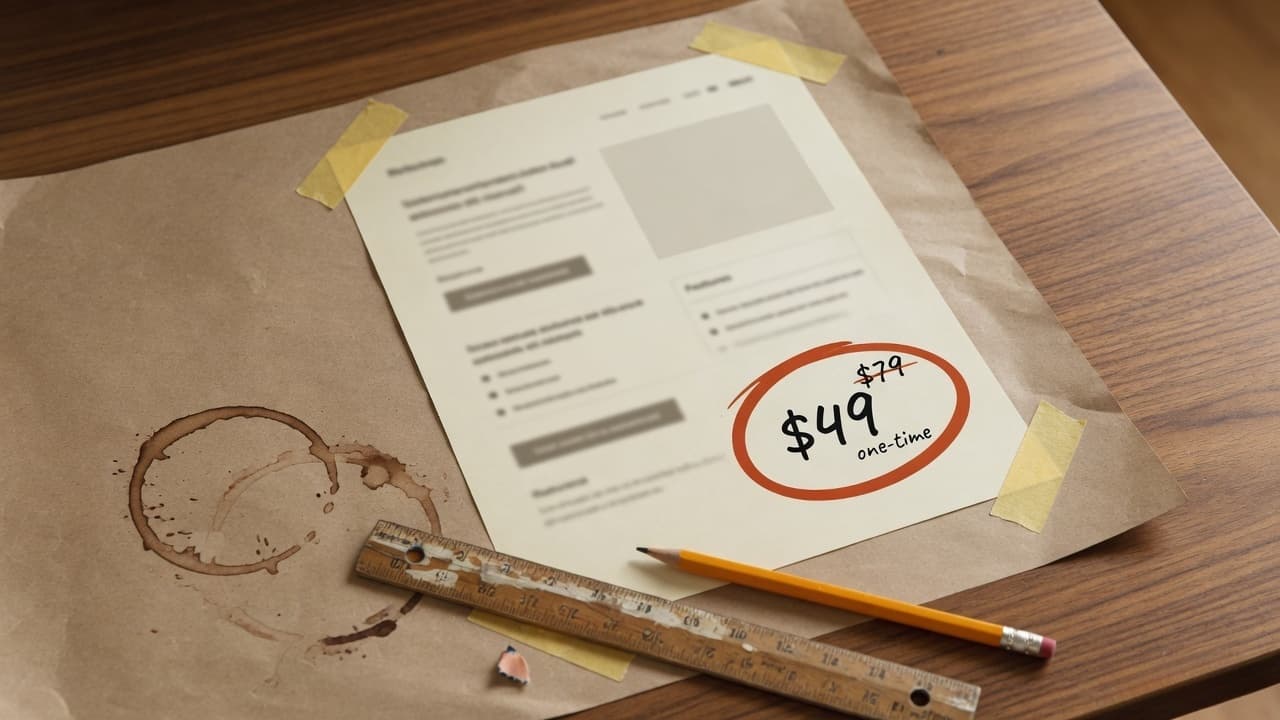
What still filters is price. A number on the page forces a choice. Click pay, book a call, or leave. That is why the price is the test, not how the headline looks.
I think real validation of an idea happens with executing it and then people getting their credit card out and paying you for it.
You do not need a full product to run that filter. You need an honest offer and a path for money to move.
What Buffer proved with two pages
Joel Gascoigne wrote how Buffer started. First page: the idea, and a way to leave an email. Second experiment: a pricing page in the middle. One more click before the email. People still came through. Some clicked paid plans. Only then did he build the real product. First paying customer arrived within days of launch.
That sequence still works. Interest first, then willingness to pay, then code. In 2026 the trap is reversing it: months of product, then a page with “Join the waitlist” because you are scared to name a number. A waitlist is not the test. Payment is.
What goes on the one page
Keep the page boring and specific. Amy Hoy’s landing page rules still apply: make the reader the star, not the product. Lead with their pain in their words. Then the outcome. Then the price. Then the button. Draft the headline with the one-sentence SaaS description guide.
Write these blocks and stop:
- Who it is for, in one line (job, company size, or situation).
- The messy thing they already do, in their language.
- What is true after they use you (time back, fewer tools, one report, one handoff).
- What you do not do (so the wrong people leave).
- The price, in plain text, not “contact us.”
- What happens when they click: pay now, preorder, or book 15 minutes.
- One honest status line: shipping now, manual for the first ten, or refund if late.
Skip the feature grid until someone has paid. Skip fake logos. Skip a long story about your stack. If you need a screenshot, show the one screen that removes the pain, even if you stitch it in Figma or generate it and label it as a preview.
[Outcome] for [who] who still [pain in their words]. [Price] to start. [Pay / preorder / book] today.
Example shape, not a product claim: “Weekly client reports for freelancers who still paste from five tabs. $49/month. Pay and I send the first report by Friday.” The page is a deal, not a design sample. If the bill should depend on seats or usage, choose the SaaS pricing model before writing the offer.
Put a real price and a real pay path
Pick a number you can defend on a call. Put it on the page. Wire a Stripe Payment Link, an invoice, or a calendar link that is clearly a sales call. Levels’s 2023 method was blunt: mockup, traffic, Stripe preorder, see what sells. You do not need TikTok. You need the same honesty: money against a promise.
- Preorder or paid early access if the product is not live
- Full price with a short start (one month, one seat, one project) if you can deliver by hand
- Book a call only when the deal needs a demo; still say the price on the page
Do not use a fake checkout that steals card details. If you cannot take payment yet, take a deposit or a booked call with a deposit. Fraud is not validation.
Pay $[price] and get [first deliverable] by [date]. Or: Book 15 minutes. If it fits, you can pay on the call.
Send the page to buyers
A page with zero visitors teaches you nothing. You do not need a launch post. You need buyers who already have the pain. Paul Graham’s rule still holds: you cannot wait for users to come to you. You go get them.
This week:
- Write 20 names: people who have the job or the mess.
- Post the page only in rooms where those people already talk (not only founder Slack).
- Send personal notes with the link and the price in the message body.
- Offer a 15-minute call if the sale needs a walkthrough.
Hey [name]. You mentioned [pain]. I put up a one-page offer: [outcome] for [price]. Link: [url]. If that is still a mess for you, pay there or grab 15 minutes this week. If not, who should I send this to?
If you still need language from real conversations before you write the page, run learning calls with zero users the way Rob Fitzpatrick describes in the Mom Test: their life, what they did last time, no pitch. Then put their words on the page and switch to the sales ask.
How to read the results
Track four numbers for two weeks: visits from people you actually invited, clicks on pay or book, completed payments, completed calls. Add a fifth column for the exact phrase they used when they said no or yes.
- Payments or paid preorders: build what you sold, by hand if you must.
- Booked calls, no payments: your demo or your ask is weak, or the price only works with a human in the room.
- Clicks on price, no checkout: friction or trust. Simplify the next step.
- Visits, no clicks on price: wrong traffic or the offer is not their problem.
- Almost no visits: you did not send it to enough real buyers.
Do not invent a conversion-rate goal from a blog. Look for a pattern you can act on. Three people who pay for the same outcome beats fifty compliments. Compliments are not customers.
A two-week plan
- Day 1. Write the offer in one paragraph. Pick a price. List 20 names.
- Day 1 to 2. Ship the page: outcome, price, pay or book. No extra features.
- Days 2 to 7. Send two personal messages a day with the link and the price. Answer every reply the same day.
- Day 7. Rewrite the page using only words people used back to you. Do not add features.
- Days 8 to 14. Send the next ten names. Deliver by hand for anyone who paid. Ask each paid person for one intro.
- Day 14. Count payments and booked calls. If you have signal, keep going and move into first 10 paying customers. If you have zero after real conversations, change the buyer or the offer. Do not start a rewrite of the stack.
What to stop doing
- Building for six months because the free waitlist “looked promising.”
- Hiding the price until after a 40-minute demo.
- Calling email signups validation. They are not.
- Polishing AI-generated sections instead of naming a number.
- Launching to founders when your buyer is not a founder.
- Refunding in your head before anyone has tried to pay.
When the page works
Someone pays, or books and then pays. You deliver the outcome. You ask for an intro. That is the start of a business, not the end of a design task.
The page got cheap. The price did not. Ship one honest page this week, put a number on it, and send it to people who already have the pain. If you get the first payments and you will put your name on how, send us the story. When the product is real and the name is yours, put it on the map. You can join Indiecity while you run the two weeks. It will not click pay for you.
Put the price on the page. Send the link.
FAQ
Questions people get stuck on
Is a waitlist enough to prove the idea?
No. A free email is curiosity. Someone who pays, books a call, or preorders is closer to a buyer. Pieter Levels has said for years that real validation is people getting a card out. Treat waitlist size as a traffic metric, not a business metric.
Do I need a working product before the page?
No. You need a clear outcome, a price, and honesty about what exists today. Joel Gascoigne tested Buffer with two pages and a price step before a full product. If money hits the account, deliver by hand until software can replace you.
What if I put a price and nobody clicks pay?
That is useful. Either the buyer is wrong, the outcome is weak, the price is wrong for that buyer, or nobody who has the problem saw the page. Change one of those. Do not spend three months building the same offer in code.
Should I hide the price behind a form?
Only if the form is the booking step, not a trap. For a SaaS idea test, put the number where a human can see it. Price is part of the offer. If people only like free, you learned something about free, not about your product.
How pretty does the page need to be?
Readable and specific beats pretty. Amy Hoy’s point still holds: the page sells when it is about the reader’s problem, not your feature list. One column, their words, one outcome, one price, one button. AI can make it look finished in an afternoon. That is not the hard part.
Is a booked call as good as a payment?
A booked call is stronger than a free signup. Payment is stronger than a call. Use a call when the sale needs a demo or a custom start. End every call with the price and a way to pay the same day when they say yes.
What price should I put on the page?
A number you can say out loud without flinching, next to what the buyer already spends on the mess (time, tools, a person). Do not copy a $9 plan because that is what SaaS screenshots show. Pick a real number, put it on the page, and let clicks and payments correct you.
How much traffic do I need?
Enough real buyers to see a pattern, not a viral launch. Twenty named people you can message often beats two thousand strangers who will never pay. After you have words that convert, you can send more traffic. Before that, more traffic only multiplies a bad page.
What if they pay and the product is not ready?
Deliver the outcome yourself, or refund fast and keep the lesson. Preorders only work if you honor them. Levels’s Stripe-preorder method assumes you take money against a real promise, not a fake storefront you abandon.