You have ten people who sent money. That is real. The next trap is treating the price like a guess again: invent an ARPU target from a Twitter thread, copy a Series B grid, or freeze because “I only have ten, I cannot risk a raise.”
Ten is not a tiny sample for your job. Your job is not to publish a market report. Your job is to pick what the next buyer pays for a clear outcome. Indiecity is for one person or a team under twenty. You do not need a pricing committee. You need a number you can say without wincing, and a rule for when that number moves.
Use those customers to test the billing unit as well as the amount. Compare SaaS pricing models before deciding whether the next offer should charge per account, per seat, or for usage.
Ten payers beat an invented ARPU chart
Early founders love fake precision. Average revenue per user from a blog. “Healthy SaaS is X.” Screenshots from products with ads, brand, and a sales team you do not have. None of that is your price. Your price is what a specific person pays you to make a specific mess smaller.
Write down what your ten actually pay. Write the hours you spend on them. Write the outcome they bought in their words. That sheet is more honest than any ARPU table. If a number is not on that sheet or on a public primary source you can link, do not put it in your plan as if it were law.
Charge more than the product you still see as unfinished
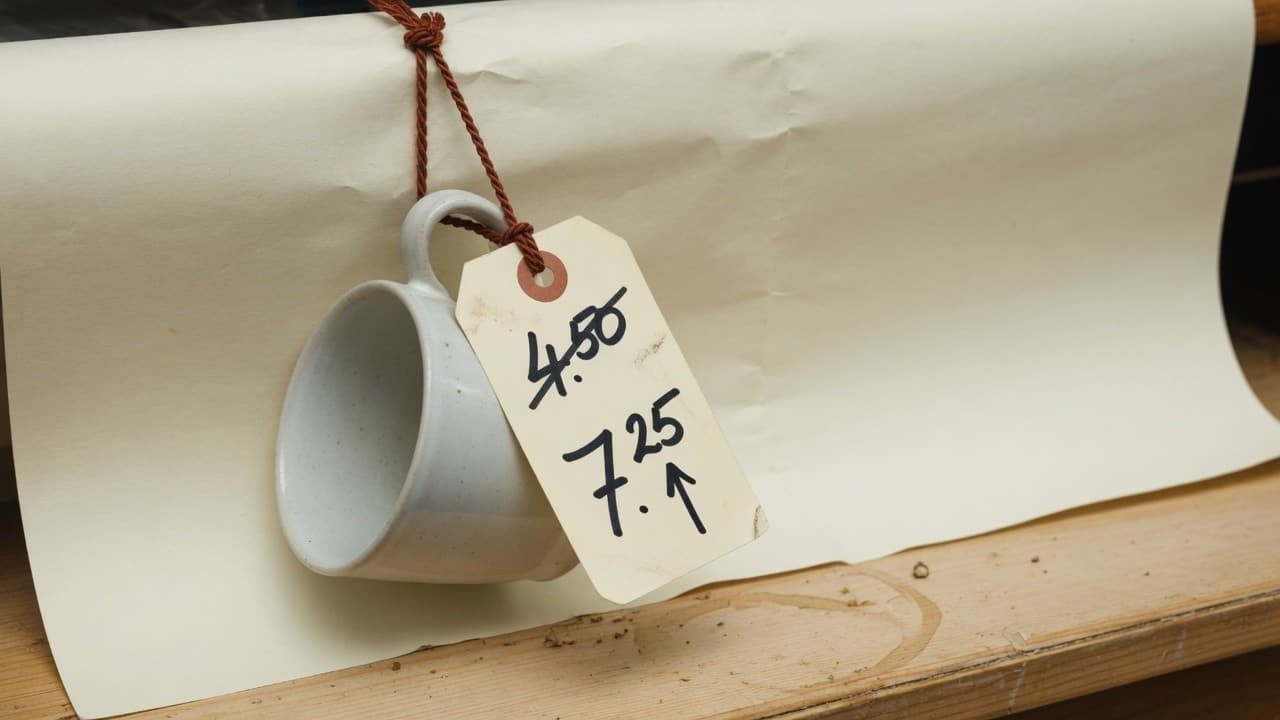
Patrick McKenzie (patio11) wrote in 2006 that you can probably stand to charge more. It still holds in 2026. You see every wart. They see whether the problem gets smaller when they pay. Do not price your regret.
In his SaaS pricing notes, he calls the $9 and $19 habit what it is: technical founders extrapolating from “code is free to me.” A $9 plan only works if you have Netflix-scale distribution. You do not. He walks through re-segmenting BidSketch so agencies paid far more than freelancers, and he treats locking early adopters on their old cheap plan as a cheap long-term marketing expense, not a moral failure.
With only ten customers, “charge more” is not a growth hack. It is how you stop building a support hobby. Cheap buyers write more mail for less money. You feel that at customer eight, not at customer eight hundred. The raise still waits until you can say the new number out loud.
Raise after you can say the number
Do not raise because a thread told you to. Raise when two things are true. First, you can say the new number on a call without whispering. Second, you have a signal from the ten: they buy without flinching, they introduce peers, support is heavy relative to what they pay, or a new buyer type gets more value than your early crowd.
If you still cannot say today’s price out loud, you do not have a raise problem. You have a belief problem. Fix the outcome sentence, or admit you do not believe the product earns that fee yet. Practice the sentence until it is boring. Then put the higher number on new signups. When you do raise, do it in the open, with a date and a reason.
It is [new price] per [month/seat/project] for new customers. People I work with already spend more than that in [time / tools / the person who owns this] on [outcome]. If that is still a pain, we can start this week.
Say it. Stop talking. Take payment while they care. The same discipline you used to get the first 10 paying customers without ads still applies. Pricing is not a doc. Pricing is the number you say, then a way to pay.
What the ten can actually teach you
- They ask the price early: the problem is real. Keep or raise.
- They negotiate every dollar and demand full support for free: wrong segment or wrong packaging.
- They pay and never open the product: you sold a story, not a weekly job.
- They pay, use it, and intro a peer: price and outcome both work. Ask for another name.
- Nobody flinches and you are drowning in support: new customers get a higher number.
- They all came from one room and one pain phrase: do not average that into a fake market ARPU. Double down on that room.
Ignore “interesting” and “maybe later” as pricing data. Payment, usage, and support load are data. Polite praise is not.
New price for new buyers. Keep the ten on the old one
The clean move with a small base is simple. Leave the first ten on what they already pay if you want their goodwill and case studies. Publish the new number for everyone who has not paid yet. McKenzie’s BidSketch example is the pattern: early people stay cheap, the business re-segments around who gets the real value.
If you must raise on existing accounts, write one honest email. Name what improved. Give a date. Offer a short window at the old rate if that is your style. Do not surprise them on a renewal invoice with no note. Ten people will notice if you raise them with no conversation.
Quick note: new customers now pay [new price] because [outcome / support reality in plain words]. You stay at [old price] as a thank you for starting with me. If you ever need more seats or [higher tier thing], I will price that separately and tell you first.
It is [new price]. That is what it costs for [outcome] with me answering when it breaks. If you want to compare it to what you spend now on [substitute], I am happy to walk through that in 15 minutes.
Still no rival grid? Price the substitute
Having ten customers does not magically give you a competitor matrix. If you still freeze without someone else’s column to copy, use the substitute cost: hours, stacked tools, a person who owns the spreadsheet, mistakes that cost real money. That method is spelled out in how to price a SaaS when you have no competitor to copy. Your ten already live those substitutes. Ask them again in their words, then set the next price next to that mess, not next to an “industry standard” nobody can point to.
You can probably stand to charge more.
A one-week pass with only ten accounts
- Day 1. List each of the ten: what they pay, what they use, hours of support, how they found you, the phrase they use for the problem.
- Day 1. Write the outcome in one sentence and a candidate new price you can say out loud. If you whisper it, lower it one step or practice until you do not.
- Day 2. Put the new price on the public page for new buyers. Keep old customers on old terms unless you planned a raise with notice.
- Days 3 to 5. Send personal notes that include the new number. Track sent, replied, booked, paid. No mass sequence.
- On every call, say the number and stop. Take payment the same day if they say yes.
- Day 6. Rewrite the page with their words for the cost of the old way. Do not add features to justify the price.
- Day 7. Keep the new price if people paid. If everyone who feels the pain vanishes at the number, change buyer or packaging. If nobody flinches and support is heavy, raise again for the next cohort only.
You will not get a perfect ARPU from a blog. You will get a number that has met ten real wallets and a few new ones. That is the only pricing research that ships.
What to stop doing
- Inventing an ARPU goal from someone else’s screenshots.
- Keeping a joke price “until we have more customers.”
- Raising because a podcast said to, before you can say the number yourself.
- Building three tiers to look serious before you have sold one clear offer.
- Surprising the first ten on renewal with no conversation.
- Dropping to free when a prospect hesitates instead of checking substitute cost.
- Hiding the price until after a long demo.
Then the next ten pay a real number
Ten customers is proof that someone will pay. It is also the moment founders undercharge out of gratitude. Say a number you can defend. Skip the fake ARPU chart. Raise for new buyers after you can say the higher number out loud. When the raise works and you will put your name on it, send us the story. When the product is real, put it on the map. You can join Indiecity while you run the week. That gives you people to talk to. It does not say the price for you.
Write what the ten taught you. Pick the next number. Say it on the next call.
FAQ
Questions people get stuck on
Is ten customers enough data to change the price?
Yes for a decision you can reverse next week. Ten conversations with people who paid beat a spreadsheet of industry ARPU you found online. You are not running a public company cohort study. You are choosing what the next buyer pays.
What ARPU should I aim for at this stage?
None that a blog invents for you. There is no honest early-stage ARPU chart for your product. Write down what your ten actually pay, what support they cost you, and what mess you remove for them. That is your number. A Twitter screenshot of someone else’s MRR is not a target.
Should I raise prices on the ten I already have?
You can, but you do not have to. Patrick McKenzie’s SaaS pricing notes call grandfathering early adopters on a cheap plan a cheap marketing expense in the long run. Many founders leave the ten alone and put the new number on new signups only. If you raise on existing accounts, give clear notice and a reason tied to value, not panic.
When should I raise?
After you can say the new number on a call without wincing. And after a real signal: people buy without flinching, support is heavy relative to what they pay, or a new type of buyer gets far more value than your first ten. Do not raise because a podcast said “charge more” in the abstract. Raise when the sentence is yours.
What if I raise and nobody buys?
Then the new number is above the value this buyer feels today, or you are talking to the wrong buyer. Drop back, change the segment, or tighten the outcome. Do not invent a free tier to soothe the silence. Fix the offer or the room you sell in.
I only have ten people. Won’t a higher price kill growth?
A joke price kills the business slower and with more midnight support mail. McKenzie’s point for years: cheap buyers treat you like a cheap vendor. Ten serious customers who pay enough for you to answer email beat fifty free trials who never convert. Growth from the wrong price is a larger support load, not a company.
How do I pick the next number without a big competitor grid?
Price against time, tools, and mess they already burn, the same way you would with no competitor at all. If you still need that path spelled out, read how to price a SaaS when you have no competitor to copy. Your ten customers already gave you substitute costs. Use their words, not a category average.
Do I need three tiers now that I have a little revenue?
Not yet. One clear offer and one number you will say out loud is enough. Tiers wait until you see who overbuys, who underbuys, and which feature actually splits plans. A pretty grid with three invented columns is still not research.
How does this fit with getting the first ten?
If you do not have ten yet, get them with a real price in the note and on the call. That sequence is how to get your first 10 paying customers without ads. This guide starts after payment is real and asks what the next buyer should pay.